
Travel Blog
Japan’s Love Hotels: Recession-Proof?
by Michael Yessis | 07.09.09 | 1:43 PM ET
Looks that way. Apparently Japan’s love hotels have been rocking, even in what CNN calls the country’s deepest economic recession since World War II. “Even these days, on the weekend, every love hotel is full of people—it’s hard to get in,” one woman told CNN. “You can never stop sexual desire.” Or perhaps the drawing power of the Hello Kitty-themed rooms.
 Email to friend
 del.icio.us
 Digg
Digg Facebook
 Furl
Furl Ma.gnolia
 Mixx
Mixx Reddit
 StumbleUpon
 Yahoo! Buzz
Travel Song of the Day: ‘Beijing’ by Patrick Watson
by Jim Benning | 07.09.09 | 1:00 PM ET
Travel Movie Watch: ‘Soul Power’
by Eva Holland | 07.09.09 | 12:37 PM ET
Most folks have heard of the Rumble in the Jungle, Muhammad Ali and George Foreman’s 1974 showdown in Kinshasa, but the accompanying concert—in which James Brown was one of several starring acts—is less well remembered. Now, though, Brown’s time in Zaire (now the Democratic Republic of Congo) is the focus of a new documentary, “Soul Power.”
Give Some Time, Get Some Free Travel
by Alicia Imbody | 07.09.09 | 11:46 AM ET

A new promotion from Sage Hospitality encourages travelers to “give a day” of service and “get a night” back, via a free hotel stay or 50 percent off the rate at 52 hotels across the U.S.
Programs like these show potential to encourage public service in exchange for travel perks, especially among folks with more spare time right now than spare change. There’s no obligation to stay additional nights. Just complete eight documented hours with a registered 501(c)3 non profit organization. Extra (karma) points if you work for a green cause to help offset the environmental impact of your trip.
Even Mecca Getting Hit by Recession
by Eva Holland | 07.09.09 | 10:59 AM ET
Bookings from pilgrims are “way down” in the Muslim holy city, according to Reuters. Local hoteliers also blame the swine flu panic alongside the global economic crisis.
From Our Contributors: The Return of Flyover America, Exploring a Secret Corner of Greece and More
by World Hum | 07.08.09 | 4:01 PM ET
Props to some of our contributors and former bloggers, who have been making a splash elsewhere in the travelsphere recently. Jenna Schnuer and Sophia Dembling, along with World Hum contributor Matt Villano, relaunched the Flyover America blog today at readflyoveramerica.com. Here’s some of what they love about America.
Elsewhere, Joanna Kakissis ventured to Thrace and East Macedonia in Greece for a fine piece in the New York Times.
Congrats to David Farley, whose book An Irreverent Curiosity comes out tomorrow. Look for an interview with him tomorrow on World Hum.
Finally, on the non-travel front, Boy Alone: A Brother’s Memoir, by Karl Taro Greenfeld, has earned rave reviews in the Washington Post, among other publications.
‘Whatever Happened to the Segway?’
by Eva Holland | 07.08.09 | 3:06 PM ET
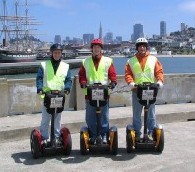
As most travelers know, it became the much-mocked vehicle of choice for niche-market guided city tours worldwide. But there’s more to the story: Slate takes a thorough look at the personal-transport revolution that wasn’t.
‘United Breaks Guitars’: A Passenger’s Fight Song*
by Eva Holland | 07.08.09 | 2:15 PM ET
After watching from the plane window as United’s baggage workers damaged his guitar, and then having his compensation claims denied, one musician is taking his battle with the airline to YouTube. Check it out:
John Cheever: Summer Vacation, 1954
by Eva Holland | 07.08.09 | 1:29 PM ET
The Book Bench bloggers spent last week looking back at some favorite New Yorker fiction of summer vacations past. All their selections are worthy, but this excerpt from John Cheever’s “The Day the Pig Fell Into the Well” really resonated with me. Here’s a quick teaser:
In the summer, when the Nudd family gathered at Whitebeach Camp, in the Adirondacks, there was always a night when one of them would ask, “Remember the day the pig fell into the well?” ... The perfect days—and there had been hundreds of them—seemed to have passed into their consciousness without a memory, and they returned to this chronicle of small disasters as if it were the genesis of summer.
Casey Kasem: Signing Off
by Eva Holland | 07.08.09 | 12:40 PM ET

After 39 years of counting down the hits, the omnipresent radio host is leaving the airwaves. I’ve never spent much time listening to commercial pop radio when I’m at home, but I do know one thing: Weekend road trips will never sound quite the same.
Climbing Ban Could be Coming to Uluru
by Eva Holland | 07.08.09 | 11:55 AM ET

An Australian government proposal is in the works to ban tourists from climbing Uluru, the distinctive red rock monolith that is considered sacred ground by local indigenous groups. Those same groups have been pushing for the move for years, but the proposal is—predictably—controversial in other quarters: “Big Brother is coming to Uluru to slam the gate closed on an Australian tourism icon,” said one conservative politician quoted in the Independent.
Invoking Orwell here seems a tad dramatic. I’m more inclined to agree with local elder Vince Forrester. “You can’t go climb on top of the Vatican, you can’t go climb on top of the Buddhist temples and so on and so forth,” he said. “Obviously you have to respect our religious attachment to the land too, so we’re saying please do not climb Uluru.”
Japanese Railway to Workers: Do You Pass the Smile Test?
by Jim Benning | 07.08.09 | 11:16 AM ET

I can’t count the number of times European friends and visitors to the U.S. have remarked on American workers’ penchant for wishing them a “nice day” after they make a purchase or eat a meal—wishes almost always delivered with a big smile. To Europeans I’ve met, that American custom was always regarded as either quaint or kooky or both.
I wonder what they would make of this bit of news about a Japanese railway company trying to improve customers’ experiences: Keihin Electric Express Railway Co. has begun using a scanner to assess the smiles of its employees.
From the story:
The device analyzes the facial characteristics of a person, including eye movements, lip curves and wrinkles, and rates a smile on a scale between 0 and 100 percent using a camera and computer.
Employees will be required to scan their smiles before work each day and carry around a photo of their brightest smile so they can try to repeat it. (Via FP Blog)
A Short History of Landmarks Exploding on Film
by Eva Holland | 07.07.09 | 4:17 PM ET
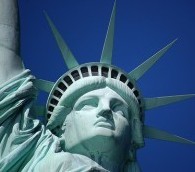
In honor of the summer blockbuster, Slate looks back, via video slideshow, at Hollywood’s penchant for blowing up major landmarks over the years. There’s some social context included—the impact of 9/11 on the disaster movie, for instance—in between the video clips, and writer Keith Phipps also teases out some rules for the genre. My favorite? “When a city is in jeopardy, its most famous landmarks fall prey first. Aliens and natural disasters always target the Golden Gate Bridge, never the Bay Bridge.”
Always the bridesmaid, huh, Bay Bridge? As a Canadian, I can relate. We inevitably get overlooked when the aliens invade.
New Border Wall Going Up Between Mexico, U.S.A.
by Eva Holland | 07.07.09 | 2:31 PM ET
This time, according to The Onion, it’s the Mexican government that’s building a wall, and the move is going ahead despite fears for the tiny guitar, novelty sombrero and three-foot tall plastic margarita cup industries. Get all the details in this (sub-titled) video report:
Study: Long-Distance Travel Triples the Risk of Deep Vein Thrombosis
by Michael Yessis | 07.07.09 | 1:41 PM ET
The dangers have long been suspected. Now, apparently for the first time, there’s research to support the theory. A report in the Annals of Internal Medicine says anyone flying for longer than four hours has increased risk of blood clotting known as deep vein thrombosis. The risk is three times greater than it is for someone not traveling. USA Today and Reuters explain the science.
Experts suggest long-distance travelers lessen the risk by, among other things, drinking water and getting up and walking around the plane every now and then, lest they suffer like Dick Cheney.
